


Products Description
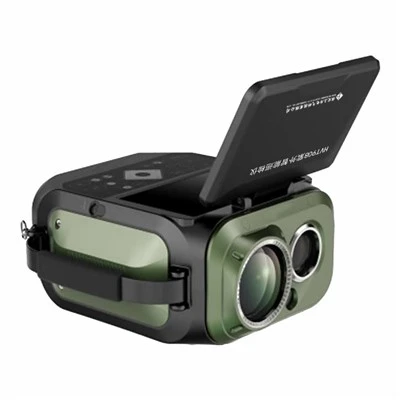
Our Handheld Partial Discharge Tester displays amplitude, waveform, phase, PRPS, and PRPD views for field diagnosis. Internal, wireless, or optical synchronization can align the result with the power-frequency phase.
Technical Principle
Sensors capture high-frequency, UHF, ultrasonic, or transient-earth-voltage signals produced by insulation discharge. The monitoring unit filters interference, extracts pulse features, compares phase-resolved patterns, and records amplitude and repetition trends for alarm and diagnosis.

Product Features
The Handheld Partial Discharge Tester places four live-discharge methods in one portable instrument. Multiple graph types help compare amplitude, phase pattern, pulse sequence, and waveform. Several synchronization methods support different field-access conditions. Stored equipment information and test records support structured inspection routes.
Operating Conditions
The product shall be installed and operated within the ratings stated in the technical parameters. Key site requirements include: frequency phase.. Keep the installation area clean, adequately ventilated, free from corrosive gas and severe vibration, and provide the specified grounding, clearance, and power quality.

Product Parameters
|
Parameter |
Details |
|
Detection methods |
UHF, HFCT, ultrasonic, and TEV |
|
Display |
4.3-inch 480×800 capacitive touch screen |
|
Operating system / storage |
Linux / 8 GB |
|
Host size / weight |
181×107×36 mm / 0.45 kg |
|
Charging |
USB-C, 5 V/2 A; 5 h |
|
Standby time |
12 h |
|
Operating environment |
-5°C to +55°C; 0-90% RH |
|
Communication |
Wi-Fi, Bluetooth, and USB-C |
|
Internal synchronization |
20-350 Hz adjustable; 0.01 Hz accuracy |
|
Analysis views |
Amplitude, cycle, phase, waveform, PRPS, and PRPD |
Product Advantages
- The Handheld Partial Discharge Tester places four live-discharge methods in one portable instrument.
- Multiple graph types help compare amplitude, phase pattern, pulse sequence, and waveform.
- Several synchronization methods support different field-access conditions.
- Stored equipment information and test records support structured inspection routes.
Main Applications
The Handheld Partial Discharge Tester is used for transformers, reactors, GIS, ring-main units, switchgear, high-voltage cables, and overhead lines.
It supports patrol inspection, fault screening, commissioning checks, and maintenance verification.
An optional ultrasonic concentrator is used for overhead-line inspection.
Components
|
Part |
Function |
|
Handheld host |
Runs measurement modes, analysis views, storage, and communication. |
|
UHF and HFCT sensors |
Detect electromagnetic and pulse-current discharge signals. |
|
Ultrasonic and TEV sensors |
Detect acoustic and transient-earth-voltage activity. |
|
Synchronization accessories |
Provide internal, wireless-power, or optical phase alignment. |
FAQ
Q: What information is needed for model selection?
A: Provide equipment type, likely discharge path, access points, voltage, noise conditions, and reporting method.
Q: What should be checked before installation?
A: Maintain safe clearance and verify sensor contact, direction, grounding, synchronization, and background noise.
Q: How can the device or system be integrated?
A: Wi-Fi, Bluetooth, USB-C, and optional upload functions support test-record transfer and management.
Q: Which options should be confirmed before production?
A: Confirm sensor package, synchronization accessory, headphones, RFID, concentrator, case, and software.
Hot Tags: handheld partial discharge tester, China handheld partial discharge tester manufacturers, suppliers, factory, Handheld Imager, Handheld Partial Discharge Tester, high voltage insulation tester, Insulating Oil Dielectric Loss and Resistivity Tester, Online Gas Chromatography Analyzer, Transformer Winding Deformation Tester